
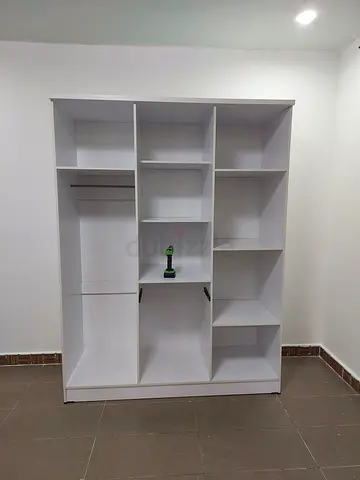
A cupboard might seem like one of the simpler elements in a home. It holds things. It has a door. It sits against a wall. But anyone who has lived with poorly designed storage knows how much a badly conceived cupboard can affect daily life, and anyone who has had a set of beautifully crafted built-in cupboards made for their home knows what a transformative difference the right design makes.
The gap between a cupboard that simply exists and one that works perfectly is the difference between a carpenter who builds to a brief and one who genuinely designs. At Doors and Frames, we approach every cupboard project with the same depth of thought we bring to our doors, frames, and joinery work, because we believe that investing in a custom cupboard in Abu Dhabi is one of the most effective ways to enhance storage, organization, and property value. Here is how professional carpenters think about and approach the design of perfect cupboards.
The Space Comes First, Always
Before any material is specified or any door style is discussed, a professional carpenter's first priority is understanding the space the cupboard will occupy and the life it needs to support. This sounds obvious but it is where the majority of poorly designed cupboards fail. They are designed in isolation from the room around them and from the actual habits and needs of the people using them.
Precise measurement is the foundation of everything that follows. In Dubai's villa and apartment environments, where rooms are often non-standard in their proportions and where ceiling heights, existing architectural features, and air conditioning duct positions all have implications for what is possible, taking measurements carefully and thoroughly before a pencil touches paper is not optional. A cupboard designed on approximate dimensions will reveal its imprecision during installation in ways that are difficult and costly to remedy.
Beyond dimensions, understanding the room's architectural character guides every design decision. A bedroom with ornate cornicing and traditional detailing calls for a different cupboard design language than a contemporary open-plan apartment where clean lines and flush surfaces define the aesthetic. Professional carpenters read the room before they design for it, ensuring that the finished piece feels like it belongs rather than like it was installed from a different context.
Designing for How You Actually Live
Once the space is fully understood, the conversation turns to how the cupboard will actually be used day to day. This is where generic off-the-shelf solutions consistently fall short and where custom carpentry earns its value most clearly. A family with young children organises clothing very differently from a professional couple. A homeowner who collects shoes needs different internal organisation from one who prioritises hanging space. A guest bedroom cupboard has entirely different requirements from a master bedroom wardrobe that two people access every morning.
Professional carpenters ask detailed questions at this stage because the answers directly shape the internal configuration of the cupboard. How much hanging space is needed and at what heights? Is double hanging required for shirts and jackets alongside full-length hanging for dresses? How many drawers, and of what depth? Is there a requirement for open shelving for folded items or display, or is fully concealed storage the priority? Are there specific items like jewellery, ties, belts, or shoes that need dedicated accommodation?
Getting these answers before the design is finalised means the finished cupboard genuinely serves the way its owner lives rather than requiring them to adapt to whatever configuration happened to come flat-packed in a box.
Material Selection and Its Long-Term Implications
The materials used in a cupboard determine not just how it looks on the day it is installed but how it performs and holds its appearance over the years that follow. In Dubai's climate, where temperature fluctuations between fully air-conditioned interiors and the heat outside are significant, and where humidity levels can vary considerably, material selection carries real practical weight.
For the carcass structure, high-quality moisture-resistant MDF or plywood are both sound choices depending on the application and budget. Solid wood brings warmth and genuine character but requires careful selection and conditioning to perform well in Dubai's environment. For door faces, the options range from painted MDF for a clean, contemporary look that is easily refreshed, to veneered surfaces that carry the visual richness of real wood with greater dimensional stability, to lacquered finishes that deliver a high-gloss premium appearance favoured in modern villa interiors.
Hardware selection is equally consequential. Hinges, drawer runners, handles, and any internal fittings all contribute to the daily experience of using the cupboard. Soft-close hinges and full-extension drawer runners that glide smoothly under load are the standard at a professional level and the detail that separates a cupboard that feels premium from one that does not, regardless of how good the external finish appears.
The Role of Interior Organisation Systems
The external appearance of a well-designed cupboard is important, but what makes the difference in daily life is what happens inside. A professional carpenter designs the interior of a cupboard with the same consideration given to the exterior, specifying internal organisation systems that make the space genuinely functional rather than simply filling it with shelves.
Adjustable shelving is a baseline requirement because needs change over time, and a cupboard whose internal configuration cannot be modified becomes obsolete the moment circumstances shift. Pull-out drawer inserts for folded items, tie and belt racks, shoe racks at the correct angle and depth for the specific shoe collection, internal LED lighting that activates when the door opens, and dedicated sections for seasonal storage are all elements that transform a cupboard from a box with a door into a genuinely designed piece of furniture.
In Dubai's larger villa properties, walk-in wardrobes represent the most expansive version of this discipline, and the design principles are the same whether the space is a single built-in cupboard or a full walk-in room. Every centimetre of internal space should serve a purpose, and the organisation of that space should reflect the actual clothing and accessory collection that will live there.
Finishing, Integration, and the Final Impression
The final stage of professional cupboard design is the finishing and integration of the piece into the room. This is where the difference between a built-in cupboard that looks like a piece of furniture designed for the space and one that looks like an appliance added to it becomes most apparent. Proper scribing to walls and ceilings, flush alignment with architraves and skirting boards, and careful paint or finish matching to the surrounding surfaces all contribute to the seamless integration that defines quality carpentry.
At Doors and Frames, we take this integration seriously because we understand that a cupboard does not exist in isolation. It shares its space with everything else in the room, and the quality of its connection to that space is what distinguishes craftsmanship from mere construction.
Conclusion
If you are planning new cupboards, wardrobes, or built-in storage for your home in Dubai, Doors and Frames brings the expertise, attention to detail, and genuine design thinking to ensure the result is something you are genuinely proud of every time you open the door.
Frequently Asked Questions
Custom-built cupboards are designed precisely for your space and your specific storage needs, delivering a fit, finish, and internal configuration that ready-made options simply cannot match.
Timelines vary by scope, but most built-in cupboard projects in Dubai move from design consultation to installation completion within two to six weeks depending on complexity and material lead times.
Moisture-resistant MDF and quality plywood perform well in Dubai's interior environment. Veneer and lacquer finishes offer excellent durability when properly specified, and hardware should always be selected for long-term performance rather than appearance alone.
In many cases yes. Carcasses in good structural condition can be retained while door faces, internal fittings, and hardware are replaced to deliver a completely updated result at a lower cost than full replacement.
Yes. Doors and Frames provides a fully integrated service from initial design consultation through to manufacturing and installation, ensuring complete consistency and quality control at every stage of the project.