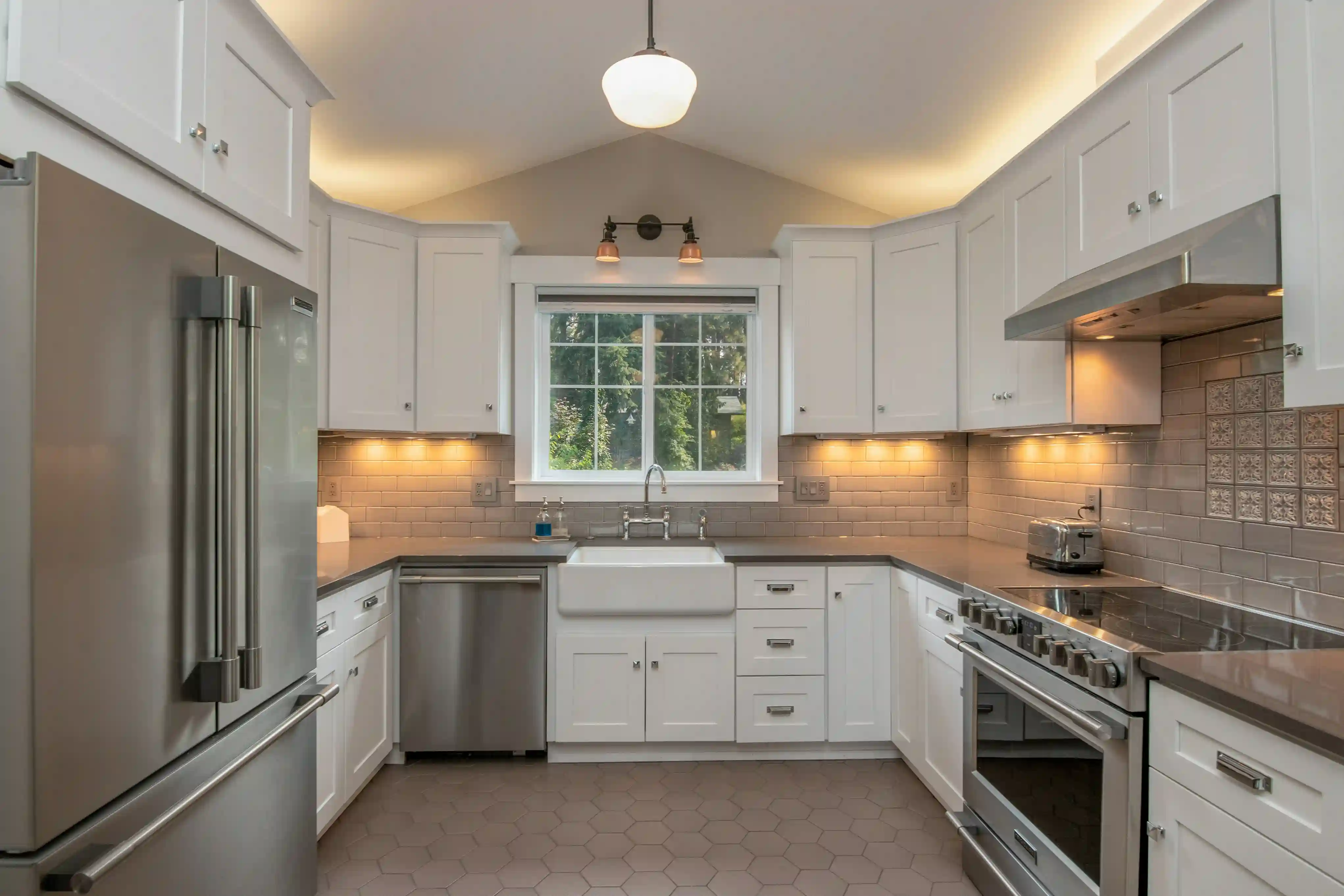
The kitchen is the room in any home that accumulates more daily wear than almost anywhere else. Doors open and close hundreds of times a week. Surfaces are exposed to steam, cooking grease, cleaning products, and the general business of a family living its life. Over time, even well-made cabinets show the effects of this accumulated use. The question most homeowners reach at some point is whether what they are seeing is normal ageing that can be managed, or whether the cabinets have reached the end of their useful life and the kitchen deserves something better.
Knowing when to repair and when to replace is one of the most practical decisions in home maintenance, and it is one where getting the answer right saves significant money over time. Replacing cabinets too early wastes investment. Persisting with cabinet in abu dhabi that are genuinely at the end of their life costs more in ongoing repairs, impacts daily function, and devalues a room that plays a central role in how a home is experienced and valued.
At Doors and Frames, we manufacture and supply custom kitchen cabinetry across Dubai and Abu Dhabi. Here are the signs that your kitchen cabinets are telling you it is time for a replacement.
_11zon.webp "cabinet in abu dhabi")
The Structure Is Damaged Beyond Cosmetic Repair
The most definitive sign that kitchen cabinets need replacement rather than repair is structural damage that affects their function and integrity rather than simply their appearance.
Warped or bowed cabinet doors that no longer close flush are one of the clearest indicators. In Dubai's climate where air conditioning creates temperature and humidity differentials between the interior of cabinets and the surrounding environment, and where kitchens are subject to steam from cooking, MDF and particleboard cabinet carcasses can absorb moisture and develop permanent distortion over time. A door that swings open on its own, that gaps at one corner when closed, or that has visibly bowed across its face has lost its dimensional stability and cannot be corrected through adjustment alone.
Carcass damage, where the actual box structure of the cabinet has deteriorated, is an equally clear signal. Sagging shelves that no longer support weight correctly, sides that have separated from the base or back panel, or screw fixings that have pulled out and will no longer hold are all structural issues that indicate the substrate material has degraded beyond the point where it can be effectively repaired. Adding new faces, handles, or paint to a structurally compromised carcass addresses appearance without addressing the underlying problem.
Water damage to the cabinet interior, whether from a dishwasher leak, a sink connection failure, or prolonged steam exposure, can create internal swelling and mould growth that affects both the structural integrity and the hygiene of the storage space. Cabinets with significant internal water damage should be assessed carefully before any investment is made in improving their appearance.
The Layout No Longer Works for How You Live
Kitchen design has changed significantly over the past decade, and a kitchen that was well-designed when it was installed may no longer suit the way the household actually uses it today.
Storage requirements evolve. A kitchen that was designed for a couple may not provide the storage capacity that the same household needs ten years later with children, accumulated cookware, and kitchen appliances that did not exist when the original layout was planned. Cabinets that provided adequate storage in a previous era may leave the kitchen chronically short of organised space regardless of how carefully items are arranged.
Workflow requirements change too. The relationship between the refrigerator, the cooking zone, and the preparation surface, the kitchen's functional triangle, benefits from layouts that were designed with current cooking habits in mind. A kitchen designed around one style of cooking or one number of cooks may feel actively uncomfortable for a household whose cooking habits have evolved.
If the main frustration with the kitchen is not its appearance but its function, replacing the cabinet layout is an opportunity to redesign the entire storage and workflow architecture of the room rather than simply refreshing what is already there.
The Finish Has Deteriorated Past the Point of Restoration
Not every sign that it is time to replace kitchen cabinets is structural. Sometimes the finish has simply reached the end of its life in a way that restoration cannot effectively address.
Laminate or vinyl wrap that is peeling, lifting at the edges, or developing bubbles beneath the surface is past the point where it can be neatly repaired. These finishes fail from the edges and corners first, and once the delamination process has started it continues regardless of how the lifted sections are addressed. The practical options are either full re-wrapping of all cabinet faces, which is a significant investment approaching the cost of new cabinetry, or replacement with new cabinets with a quality finish that will last.
Painted cabinet finishes that have developed extensive chips, staining that has penetrated the paint layer, or yellowing that affects the entire colour character of the kitchen have often reached a state where repainting produces a noticeably inferior result to the original finish rather than a convincing restoration. The accumulated surface texture of multiple paint layers, the visibility of repaired chips and dents, and the difficulty of matching aged paint colours exactly all contribute to a repainted kitchen that looks repainted rather than renewed.
Cabinet doors that have sustained extensive impact damage, either from years of use or from specific incidents, may have an underlying structure that was compromised at the same time as the surface damage occurred. In these cases, replacement of the door alone may not resolve the problem if the carcass connection points were also affected.
The Hardware Is Outdated and Incompatible With Modern Standards
Kitchen cabinet hardware has evolved substantially in terms of both function and appearance. Hinges, drawer runners, and door-closing mechanisms from older installations often lack the features that contemporary cabinetry provides as standard.
Soft-close hinges and drawer runners, which bring doors and drawers gently to rest without impact, are now the expected standard in quality kitchen cabinetry. Older kitchens that rely on simple spring-loaded hinges and basic runner systems feel noticeably inferior in daily use compared to modern equivalents, and the mechanical difference is felt every time a door or drawer is used.
While hardware replacement is sometimes possible on existing cabinet carcasses, the physical dimensions of modern hinge and runner systems do not always match the cut-outs and fixing positions of older cabinets. In these cases, making the hardware upgrade requires modifications to the cabinet itself that may not be practical or cost-effective relative to the value of what is being upgraded.
New Cabinetry as a Value Investment
Kitchen replacement is consistently one of the highest-return investments available in residential property in Dubai. A kitchen that looks modern, functions well, and has been fitted with quality materials makes a stronger positive impression on buyers and tenants than almost any other single room improvement.
Custom kitchen cabinetry from Doors and Frames is designed and manufactured to the specific dimensions, storage requirements, and aesthetic preferences of each client. This means the replacement kitchen is designed around how the household actually uses the space, with storage configured for what is actually stored, workflow positioned to reflect how cooking actually happens, and materials and finishes selected to create the kitchen that the room and the home deserve.
If your kitchen is showing any of the signs described in this guide, it is worth having a conversation about what replacement would actually involve, what it would cost, and what the finished result would look like. Doors and Frames provides this guidance as part of every client engagement.
Final Thought
Kitchen cabinet in abu dhabi do not fail suddenly in most cases. They communicate their limitations gradually, through doors that do not close properly, finishes that no longer look right, storage that never quite meets the demand placed on it, and layouts that feel like a compromise. Recognising these signals for what they are, and responding to them with a replacement that genuinely addresses them, is the decision that turns a kitchen from a room that functions into one that works beautifully every day. Doors and Frames is here to help you make that happen.
Frequently Asked Questions
Structural damage includes warped or bowed carcasses, shelves that sag under normal load, door hinges that will not hold adjustment, and carcass panels that have separated or swollen. Cosmetic damage covers surface finish issues, minor chips, and handle or hardware wear that does not affect the cabinet's structural function.
Refacing makes sense when the carcass structure is sound and the layout works well but the finish has deteriorated. When the structure is compromised, the layout needs to change, or the cabinets are very old, full replacement typically delivers better value because it addresses all issues simultaneously rather than deferring the structural or layout problems.
Quality custom kitchen cabinetry with appropriate materials for the UAE environment and proper care should perform well for fifteen to twenty years or more. Cabinets in this environment benefit from materials that manage the humidity differentials created by air conditioning, and from finishes that resist the cleaning products and heat exposure common in active kitchen environments.
Moisture-resistant MDF for carcasses, with hardwood or quality plywood for elements under higher structural load, performs well in Dubai's air-conditioned interiors. Lacquer and thermofoil door finishes handle cleaning products and temperature differentials better than plain painted MDF in active kitchen environments.
Yes. Doors and Frames designs and manufactures custom kitchen cabinetry across Dubai and Abu Dhabi, with materials, finishes, and layouts specified to the requirements of each project from initial design through to installation.